Project · Healthcare · Chatbot
Medical chatbot
A digital health assistant for clinics: patients describe what they feel, the conversation keeps a symptom record, and when a doctor is needed the bot opens a slot — without a phone queue.
Context
Front desks take the same questions all day: what hurts, how long, can I see someone. Patients wait, or they search and come in colder. Clinics needed a channel that collects the story before the appointment — and can book the appointment from the same thread.
What we built
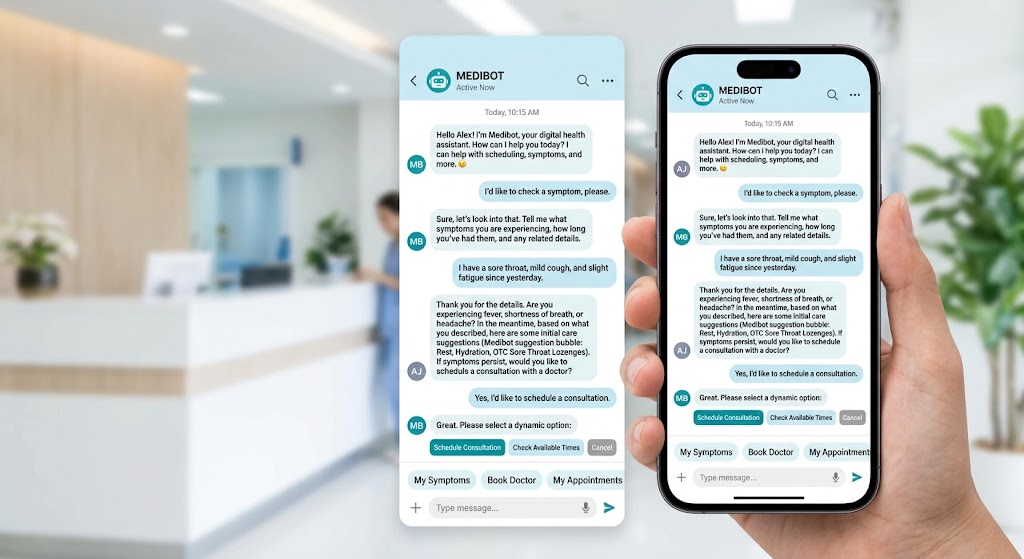
A chatbot used by more than one clinic. It walks a patient through symptoms, holds that history on the case, offers first-line suggestions where appropriate, and hands off to scheduling: available times, book a consultation, cancel.
Outcome
The same product sits in a waiting room, on a phone, or on a clinic site. Staff see a structured symptom trail instead of a blank intake. Patients get from “I have a sore throat” to a booked slot without switching apps.
Symptom tracking
The conversation is the intake. Duration, related signs, what has already been tried — captured in the thread so the clinic does not start from zero. Shortcuts such as “My symptoms” keep that record reachable after the first message.
The bot is not a diagnosis. It structures what the patient reports, can surface conservative self-care when that is the right next step, and asks whether they want a doctor when the picture needs one.
Scheduling from the chat
Booking is in the same thread: check available times, schedule a consultation, cancel. The patient does not leave the assistant to hunt a calendar. “Book doctor” and “My appointments” sit on the same bar as the symptom log, because those three jobs are one visit from the patient’s side.
One product, several clinics
The assistant is built to be reused. Each clinic keeps its own patients, slots and tone; the conversation model — symptoms in, booking out — is shared. That is the point of putting it in the portfolio as a product, not as a one-off widget.